


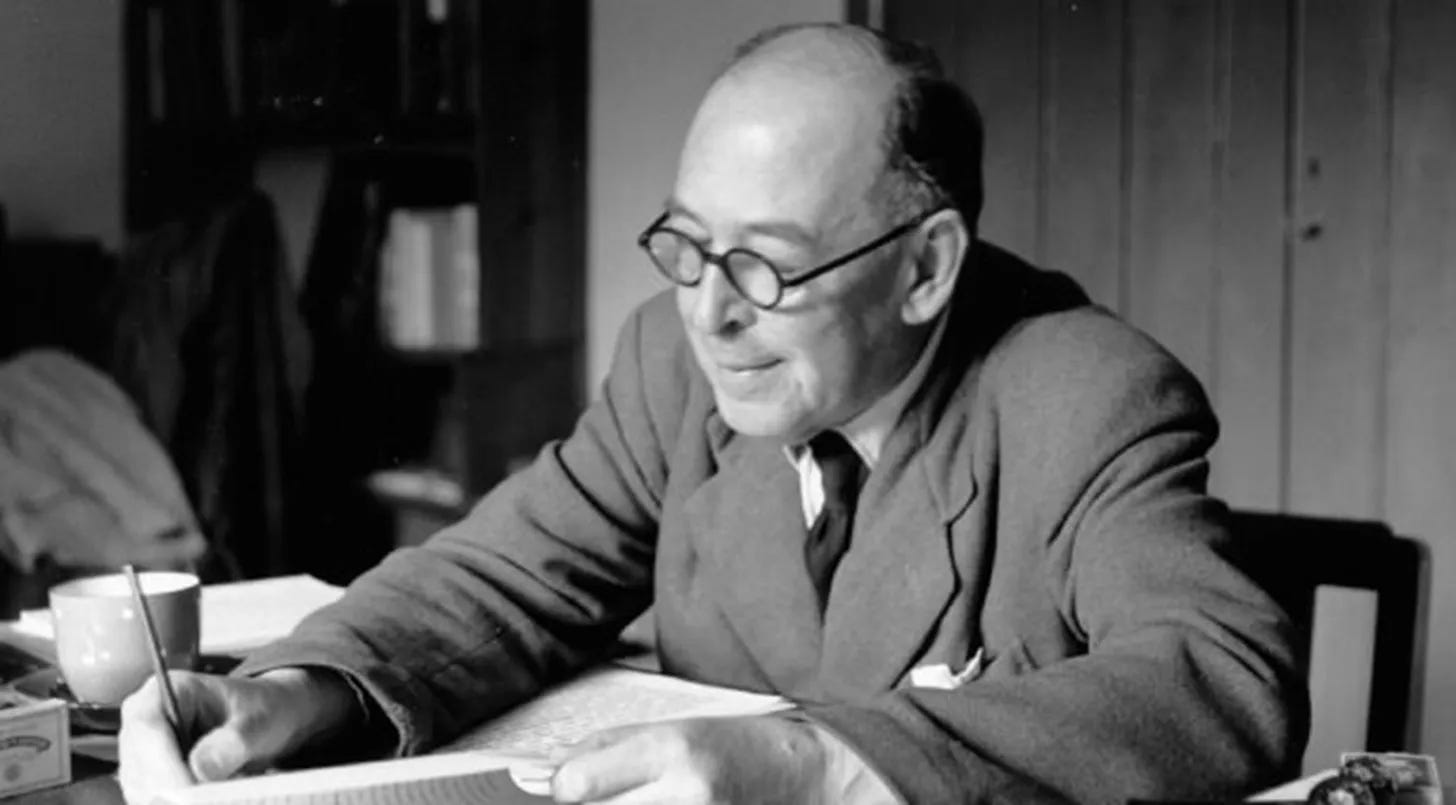
This past week, I attended a lecture by author Judith McQuoid titled “Stress, Chaos, and Change: C.S. Lewis in the Narnia Years.”
She focused on the time period of 1945 - 1956, with a special emphasis on 1949 - 1953, the four-year stretch during which C.S. Lewis wrote the seven books of the beloved Chronicles of Narnia series.
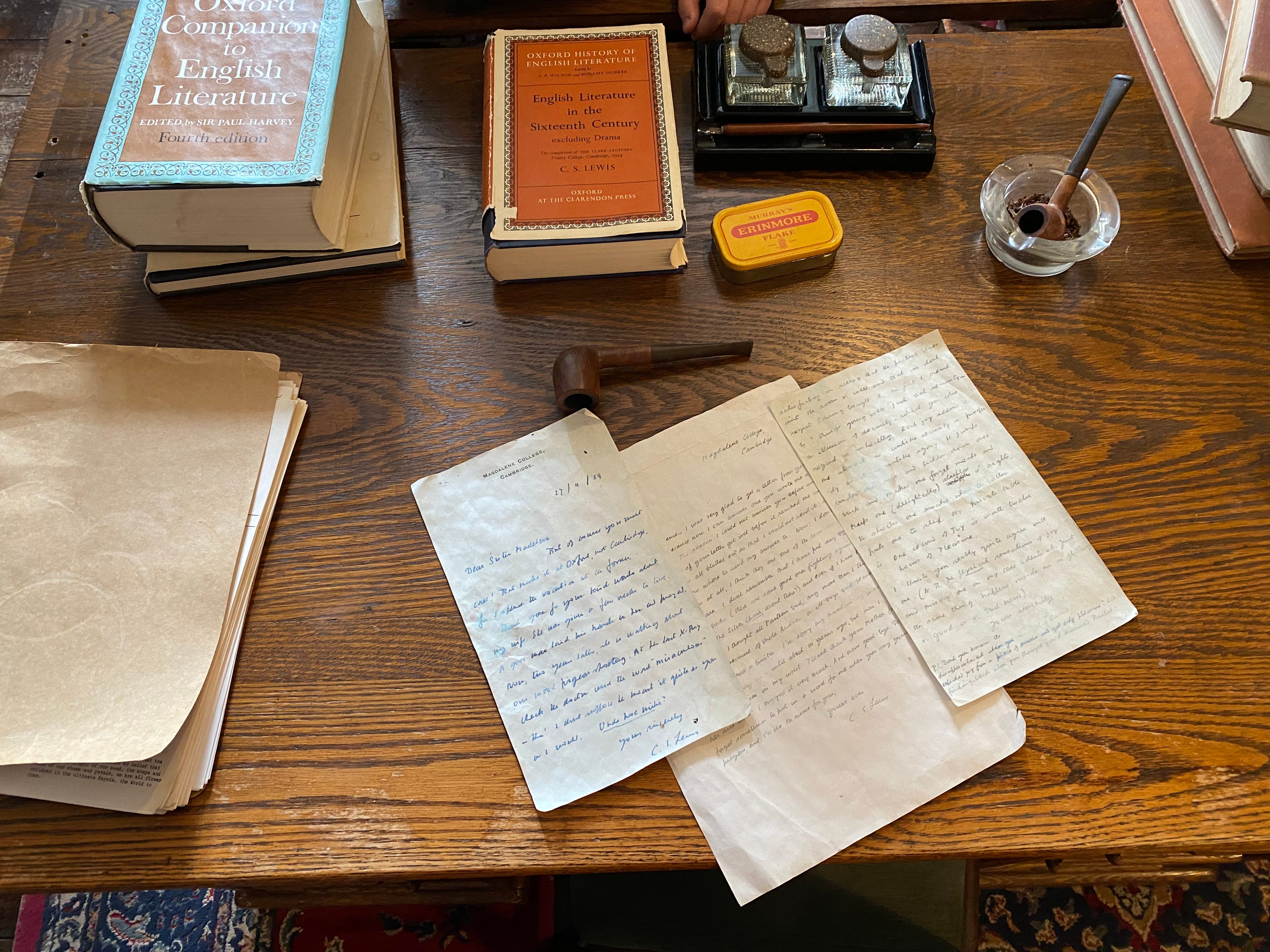
I’ve been to Lewis’ house near Oxford, the Kilns, and have seen the desk from which he wrote. I picture him at that desk writing in perfect peace in a sort of idyllic ivory tower utopia.
That’s not exactly how it went down.
During WWI, Lewis made a promise to his friend, Edward “Paddy” Moore, that if either of them were to perish during the war, the other would take care of that man’s mother. Paddy did indeed die in 1918, and C.S. Lewis kept his promise to look after his mother, Janie King Moore, for the next 30 years of his life.
It was not easy taking care of Mrs. Moore. She lived at the Kilns and was demanding of Lewis’ time and energy. Lewis not only took care of her, but also walked the dogs, cooked the meals, and did the household chores. His writing only came in short “snatches.”
She eventually required nursing home care in April 1950 and died in January 1951. Lewis was responsible for the monthly nursing home payments, which placed a strain on his finances. It’s quite startling to consider that he was struggling financially while writing books that would go on to sell 120+ million copies.
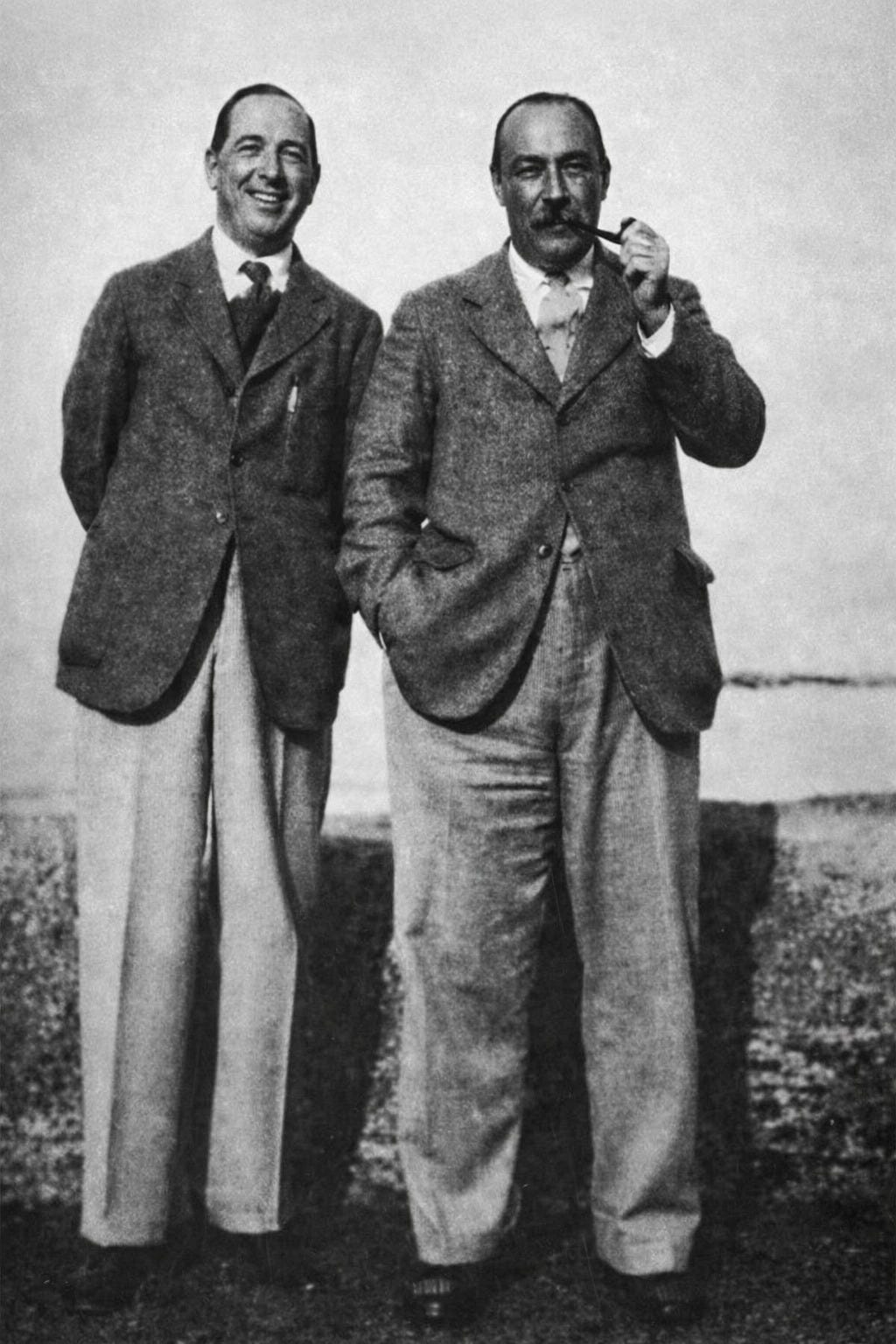
This was not the only stress in his life at the time. His brother Warren (Warnie) Lewis was an alcoholic who regularly wound up in the hospital due to binge drinking episodes. At one point, Lewis had the chance for a much needed one-month break in Ireland, but a alcohol-fueled hospital visit by Warnie made that trip impossible.
Lewis was also teaching at Oxford, walking back and forth from Magdallen College to the Kilns, frequenting the Eagle and Child pub, and responding to countless letters.
I don’t know how he did it. He broke every rule of modern-day productivity gurus. He didn’t distance himself from those who put a drain on him. He didn’t hire out menial tasks so he could focus on what he did best. It seems like he didn’t focus on himself much at all. And yet he left a legacy of over 30 books that have touched millions of lives. And he wrote those while remaining true to his commitments to those closest to him.
Would we have Narnia were it not for this dedication? These responsibilities nearly broke Lewis (at one point he was hospitalized for exhaustion). But perhaps the endless winter came from personal experience of a 30-year commitment to look after the mother of a friend. Perhaps the escape into a magical land helped Lewis cope with his monotonous and difficult circumstances. Perhaps these nearly lifelong commitments were a part of what made him the type of person who could write the types of books he wrote.
This was so soothing for my soul. Right now, in the thick of raising 3 little ones, jobs, grad school, caretaking, etc, the longing to write and create can feel agonizing against the plethora of day to day responsibilities. Writing often comes in "snatches" for me as well, whether it's on my lunch break, rocking a baby to sleep, or caring for a family member. I'm so thankful for Lewis's example. Thank you for writing this; it was much needed!