


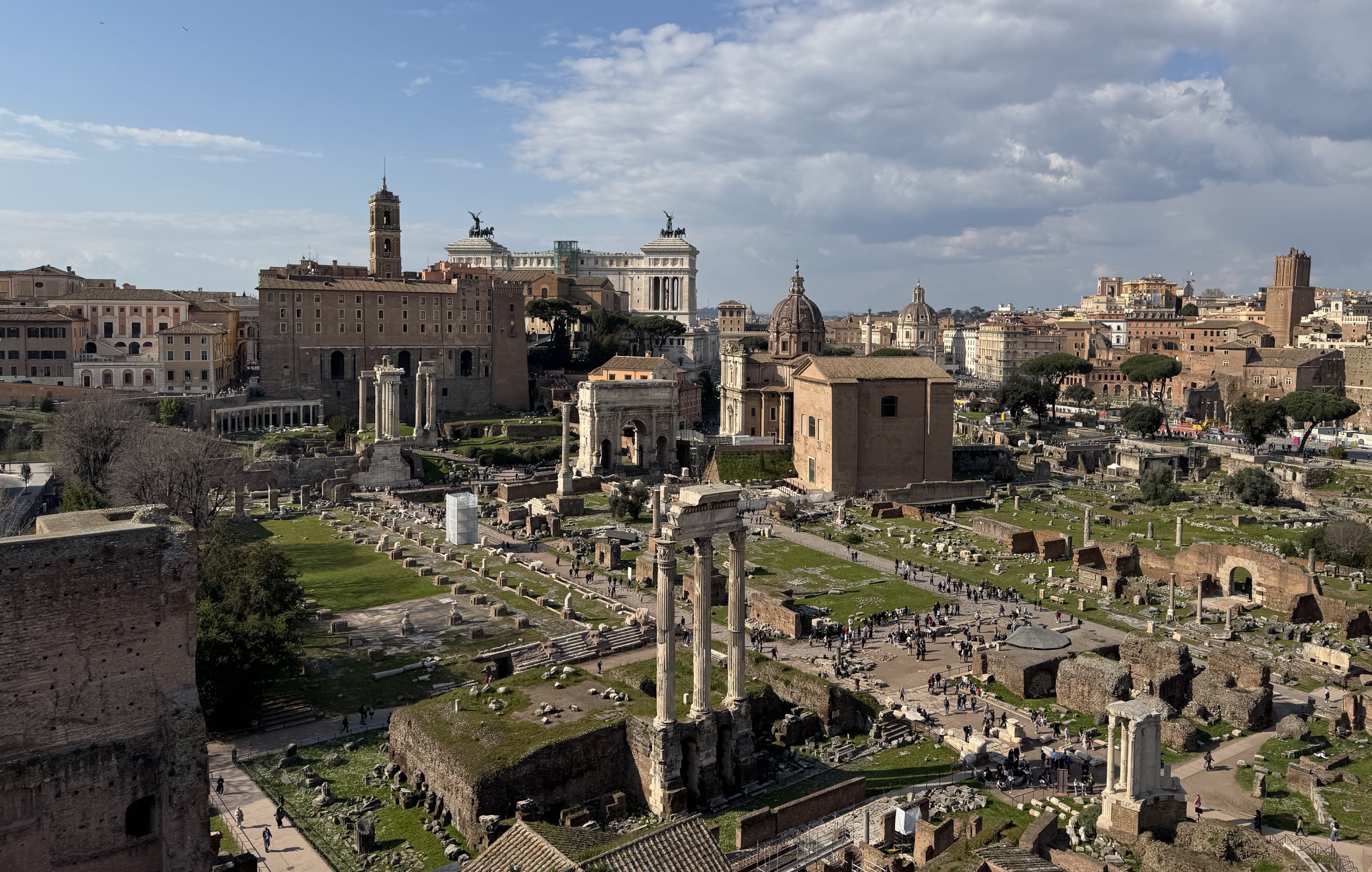
I’ve spent the past few days in Rome with my family. It’s been a wonderful trip and the sheer amount of ornate churches, historical monuments, museums, history, and delicious food have been overwhelming.
I’ve been thinking a lot about St. Paul the Apostle on this trip. Prior to leaving, Landmark Booksellers hosted Kathie Lee Gifford for an event centered around her new book Nero and Paul. As the title would suggest, the book contrasts Roman Emperor Nero to the Apostle Paul. At the event, Kathie Lee spoke some about Paul’s time in Rome.


Upon landing, one of our first visits was to the Mamertinum prison. It was also called the Tullianum and the carcer, a prison so notorious that it’s where we get the word incarcerated. Tradition holds that St. Paul (and perhaps St. Peter) were both held here awaiting execution. Tradition also holds that they were executed the same day in Rome, on June 29th, 67AD. Paul, being a Roman citizen, was beheaded while Peter was taken across the river and crucified. He asked to be crucified upside down so that he was not killed in the exact same way as Jesus. His tomb is believed to be where St. Peter’s Basilica is now located in Vatican City.
It’s possible that the second letter to Timothy was written while Paul was incarcerated in the room you see above. A church has been built atop this prison and it’s a short walk to the Colosseum (not there during Paul’s time). It’s amazing to see the ruins of the Roman Empire right outside of this prison. You see the remains of the glory of Rome above ground while Paul was in this prison cell below ground.


Photos by Atlas Obscura (they asked that I not take photos, but this is what I saw).
We had another neat encounter at a church called the Basilica of San Crisogono in Rome. While admiring its beauty, an American student who was working with the church approached us to tell us about an archeological dig beneath the very church. Along with the priest, I got to tour this area underneath the church. We descended a set of stairs that led to an underground labyrinth and to one of the oldest churches in Rome, from the 4th century AD and possibly even earlier.
If it was earlier than that, it’s possible this area was a sort of hidden gathering place for Christians, as they would have been required to meet in secret before that. The priest said there was reason to believe that one of the rooms was the house of Rufus, a friend of Paul’s mentioned at the very end of Paul’s letter to the Romans:
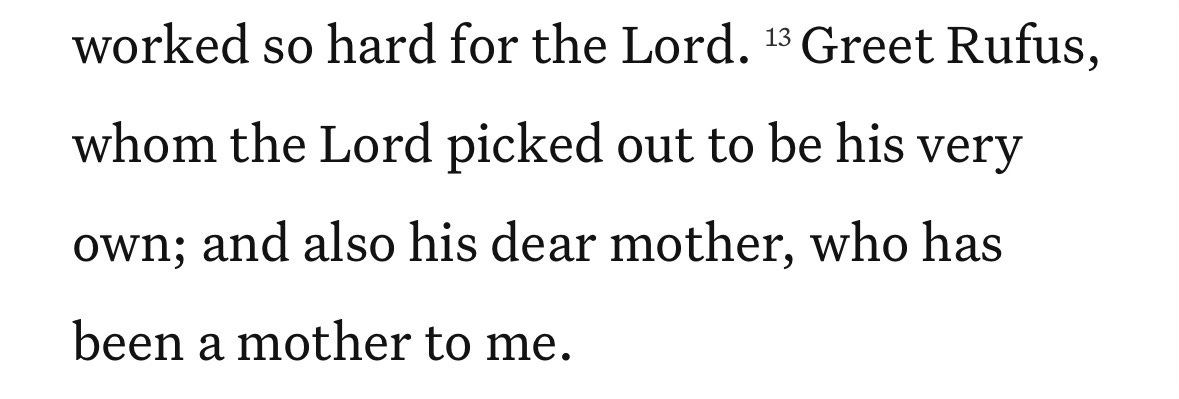
I have no idea if this is true or not, but I did see a fairly well-preserved area of Rome that were of or near that time period. Churches were often built atop important spots or over temples. It was neat to think of Rufus in Rome, of Paul’s visiting him, and of Rufus’ mother’s special relationship to Paul. It brought texture to what has only been text to me.
Rome is definitely on my bucket list for these historical sites and I’d also like to retrace Paul’s missionary journeys in modern-day Turkey and Greece, hopefully on foot someday.