


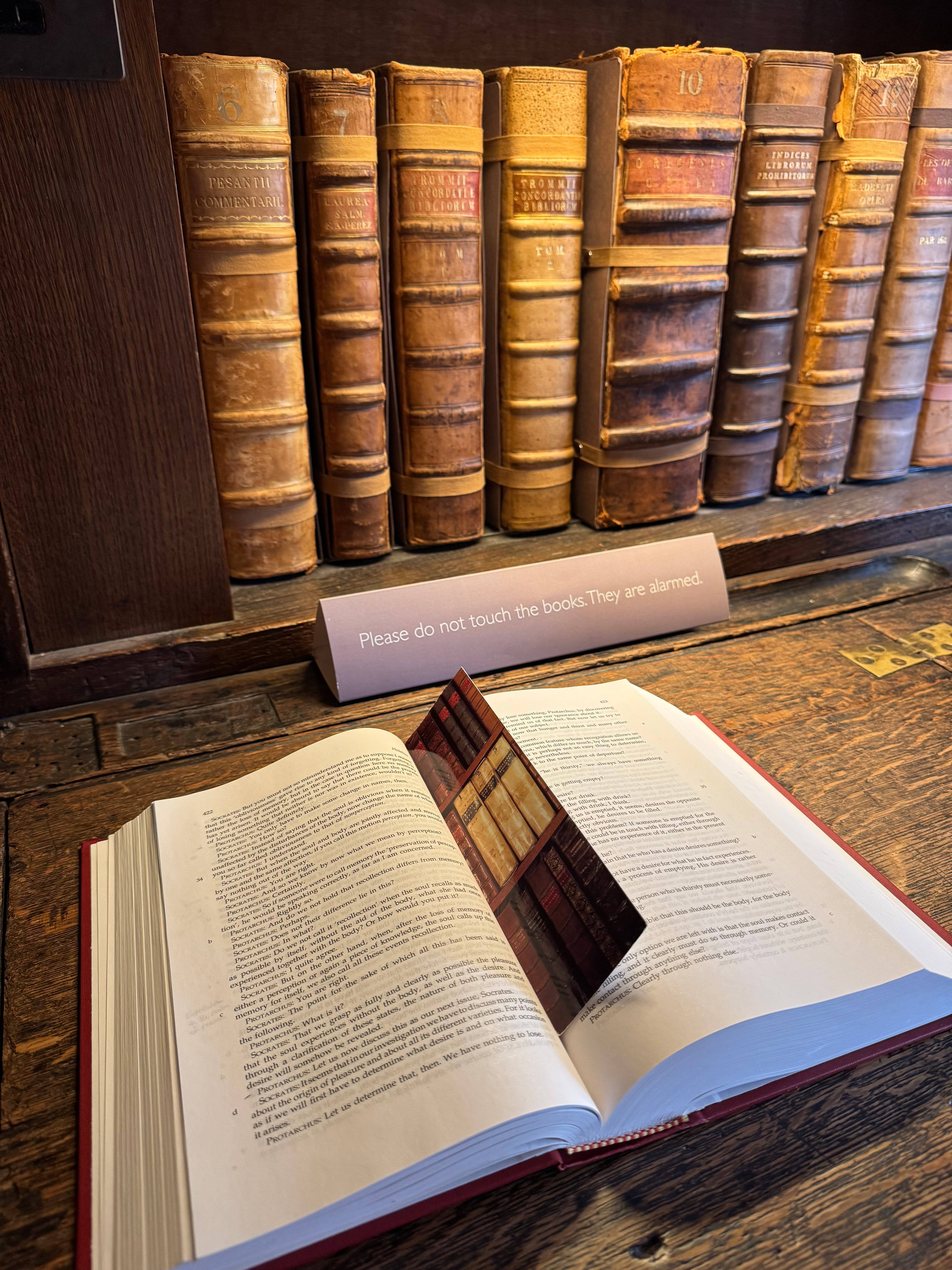
For years, I’ve been using the same bookmark in nearly all of the books I’ve read. I purchased it at Oxford University during the summer of 2000 while I was a student in a 6-week study abroad program. It shows three rows of old books from the Duke Humfrey’s Library, one of the twenty-eight of the Bodleian Libraries.
This past week, I opened up the Complete Works of Plato with the bookmark in that very library. It had been a long wait. Back in the year 2000, despite being a student, I did not have the necessary credentials to access any of the Bodleian Libraries. I had been longing to enter for 26 years.
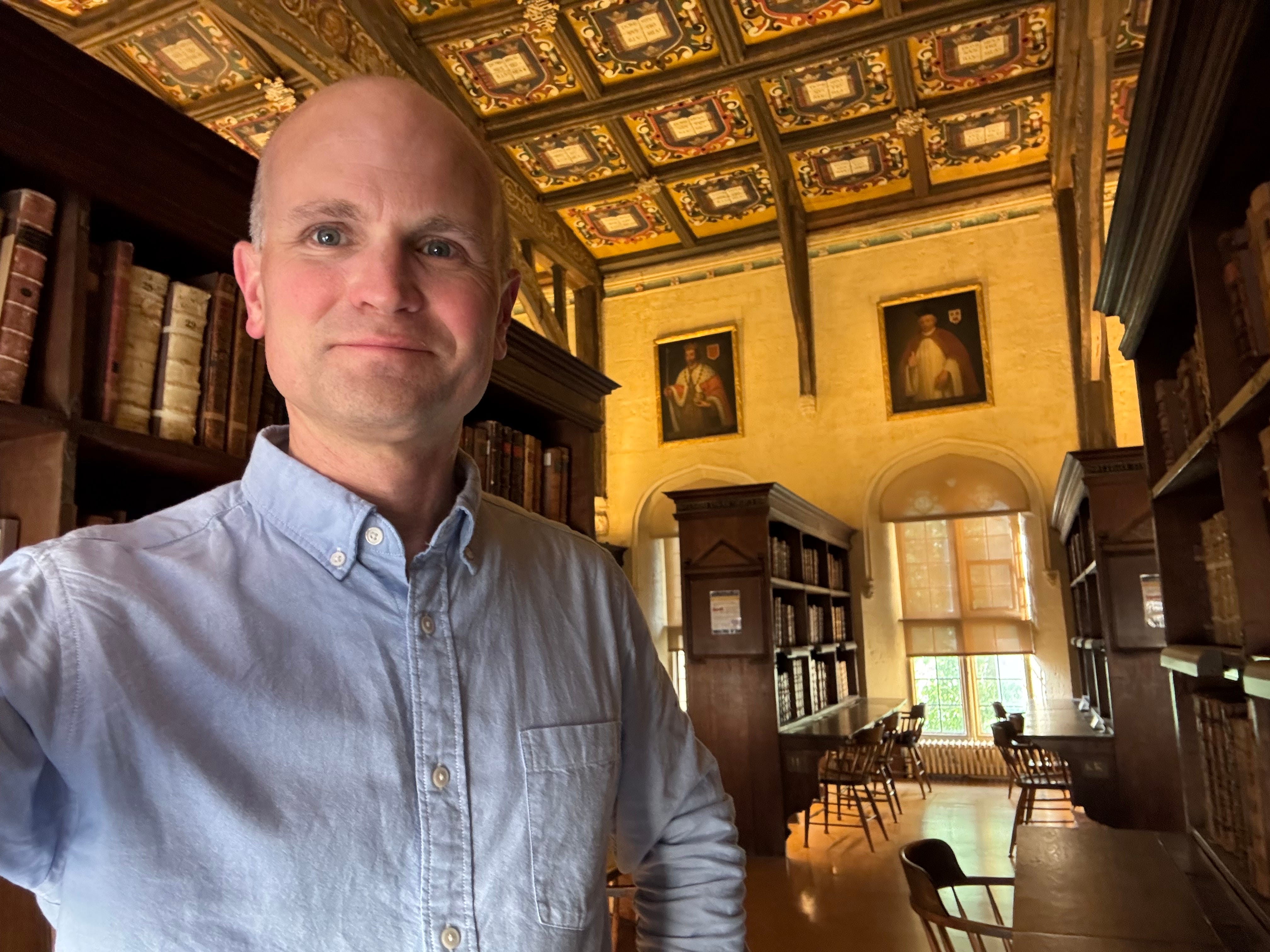
For the first time in my life, I read, worked, journaled, and marveled within two of the Bodleian Libraries this past week - the Radcliffe Camera and the Duke Humfrey’s Library. I spent parts of five different days in these beautiful places and was in my glory. I’d like to share some of that experience with you:
The Oath
Upon obtaining the necessary credentials to access the Bodleian Libraries, I was asked to recite the following oath out loud:
I hereby undertake not to remove from the Library, nor to mark, deface, or injure in any way, any volume, document or other object belonging to it or in its custody; not to bring into the Library, or kindle therein, any fire or flame, and not to smoke in the Library; and I promise to obey all rules of the Library.
The Radcliffe Camera


My first library visit was to the Radcliffe Camera, a stunningly beautiful building at the heart of Oxford with three levels of reading and studying areas. I quickly climbed the stairs to the highest spot and set out to read Plato’s Philebus dialogue. Reading a great work of literature within these hallowed halls was an experience I will never forget.
The Duke Humfrey’s Library
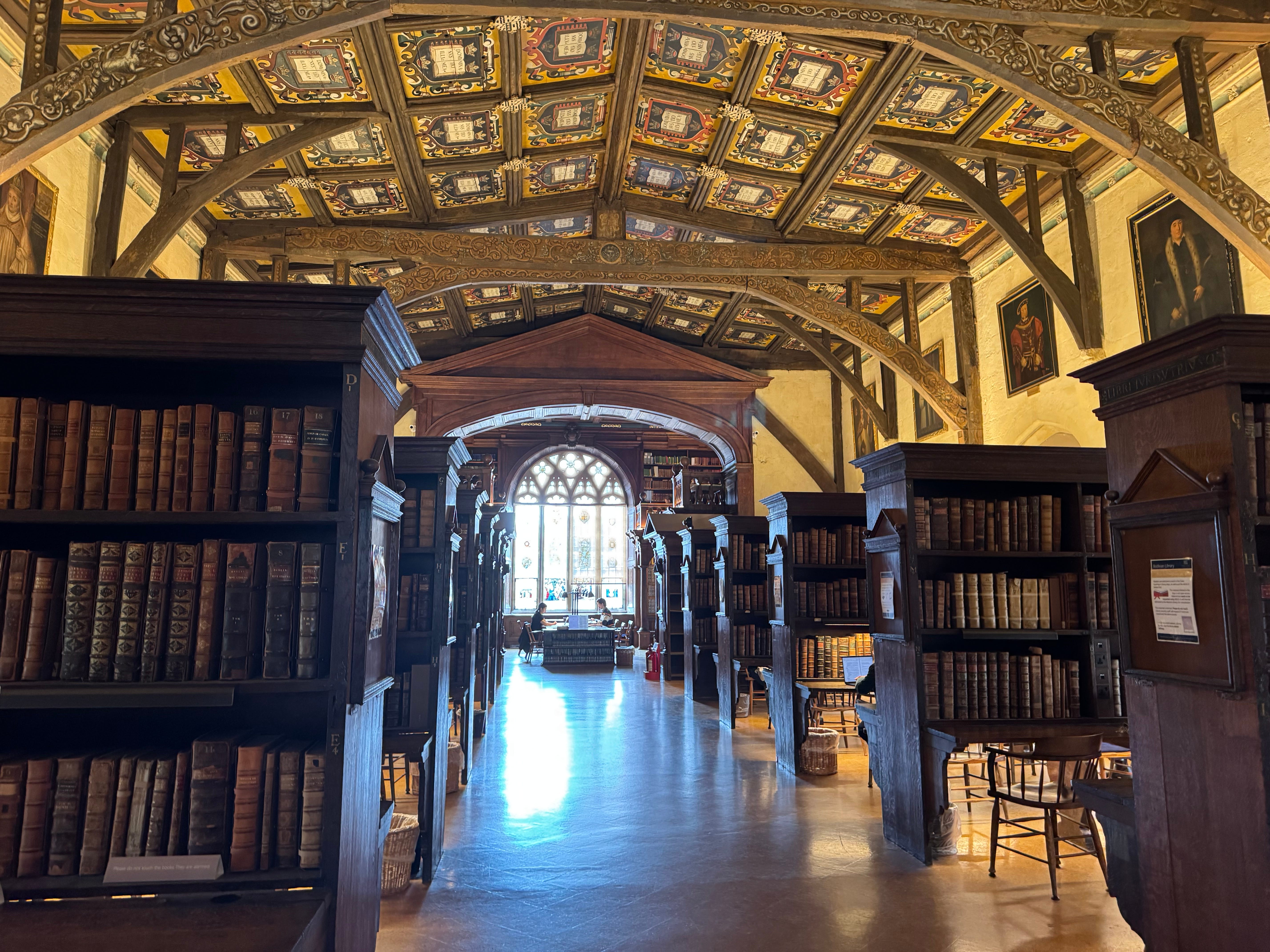
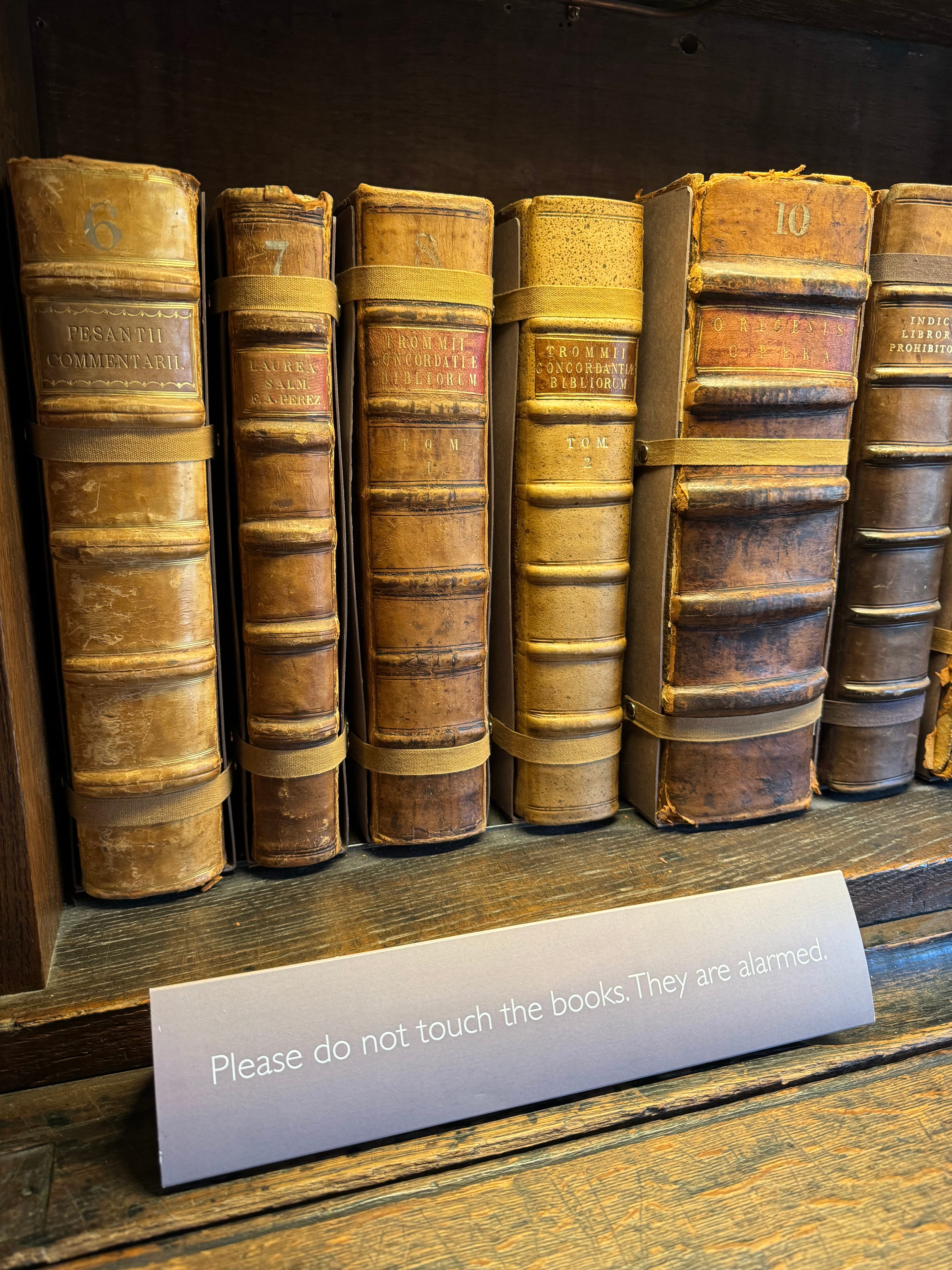
I spent most of my time in this library, setting up at one of the desks along the row of books that are hundreds of years old. Warning signs adorn each shelf - “Please do not touch the books, they are alarmed.” Though tempting, I did not touch the books.
At the end of the room, there’s an area with large windows and two levels of bookshelves. At 4:45pm, they sound a loud bell in the room to warn readers that it’s time to begin packing up before the prompt 5pm closing. Drinks and food are strictly forbidden in this room.
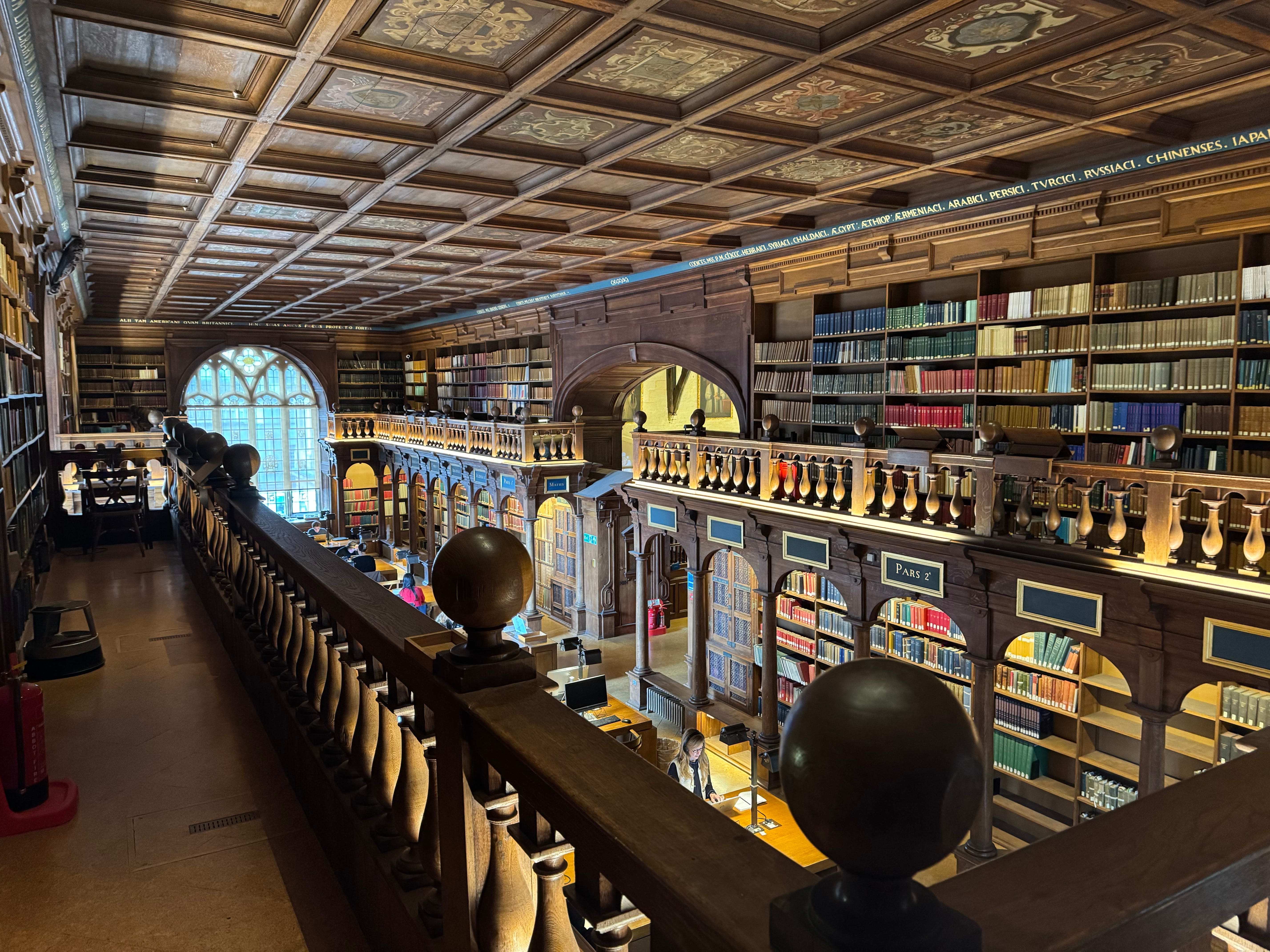
If a Platonic Form of the library exists in heaven, this is our closest counterpart on earth.
Dr. Susan Gillingham
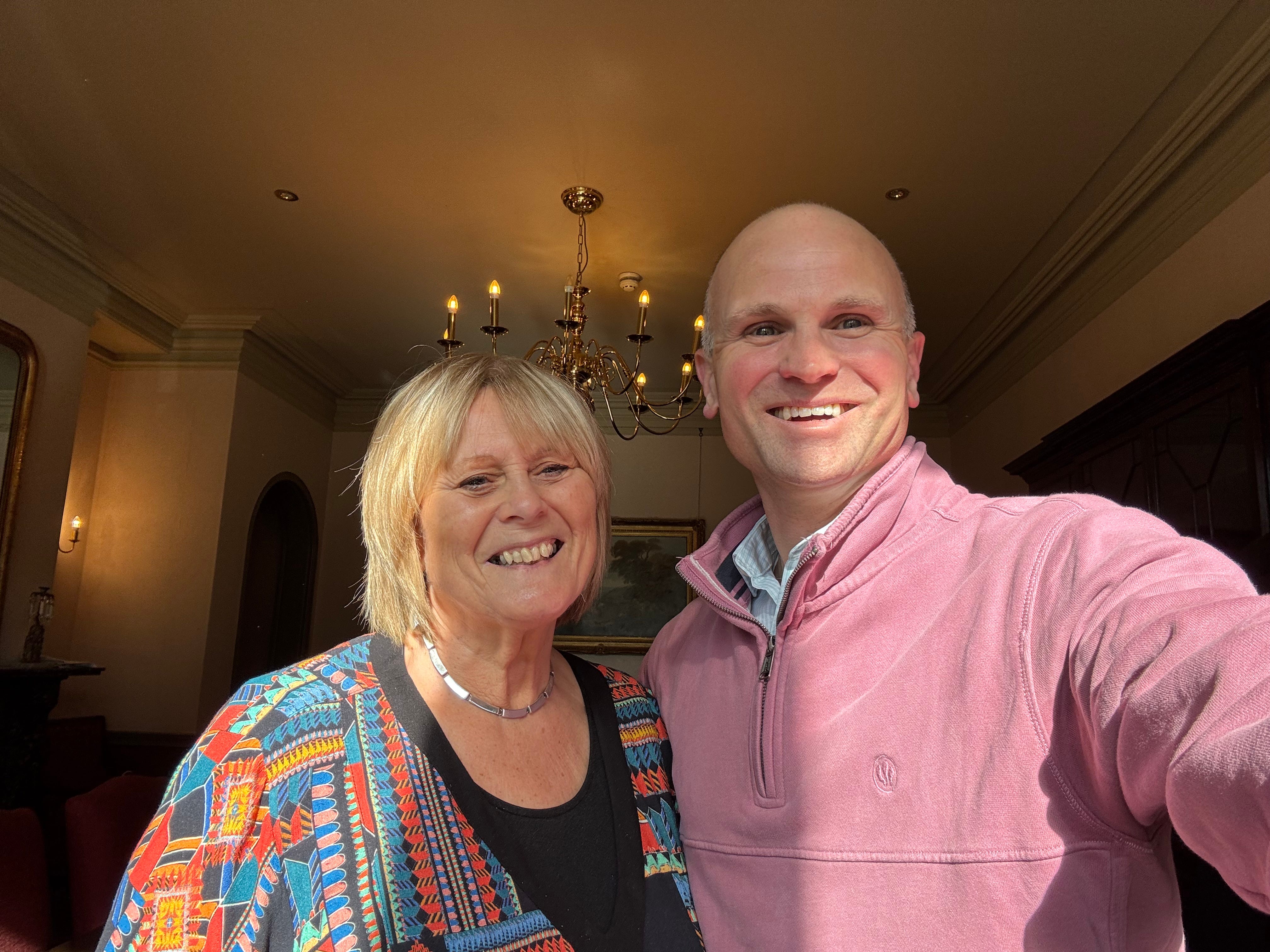
During this trip, I also reconnected with one of my Oxford dons, Dr. Susan Gillingham. She’s an expert on the Psalms and taught the Old Testament Literature course I took 26 years ago. We talked about Gilgamesh, her upcoming books, and our mutual acquaintance Malcolm Guite.
I found myself struck by the sheer number of beautiful, old buildings in Oxford. They tell a story about the thousands of people who dedicated their time, talent, and resources to building these colleges, libraries, and chapels. Our predecessors have communicated a very important message to us about what they believed to be of utmost importance. Housing books in libraries of such immense beauty shows a reverence for the written word beyond what most of us believe in this time. What are we building that will last and communicate to the next generations what is of utmost importance to us?
So amazing!! (And can I just say ... those signs about the books being alarmed *really* makes me want to test it out and see [but also not]. LOL!)
Next time I see you I’ll tell you about ordering the original manuscript for my mother’s doctoral work at the Bodlian (I too was on a 6 week program). It took them over a week to find it. Then actually let me spend about 15 minutes looking at it. Incredible experience. Not sure if they’d let someone from a “summer program
“ with a temporary library card handle an 800 year old book like that now.