


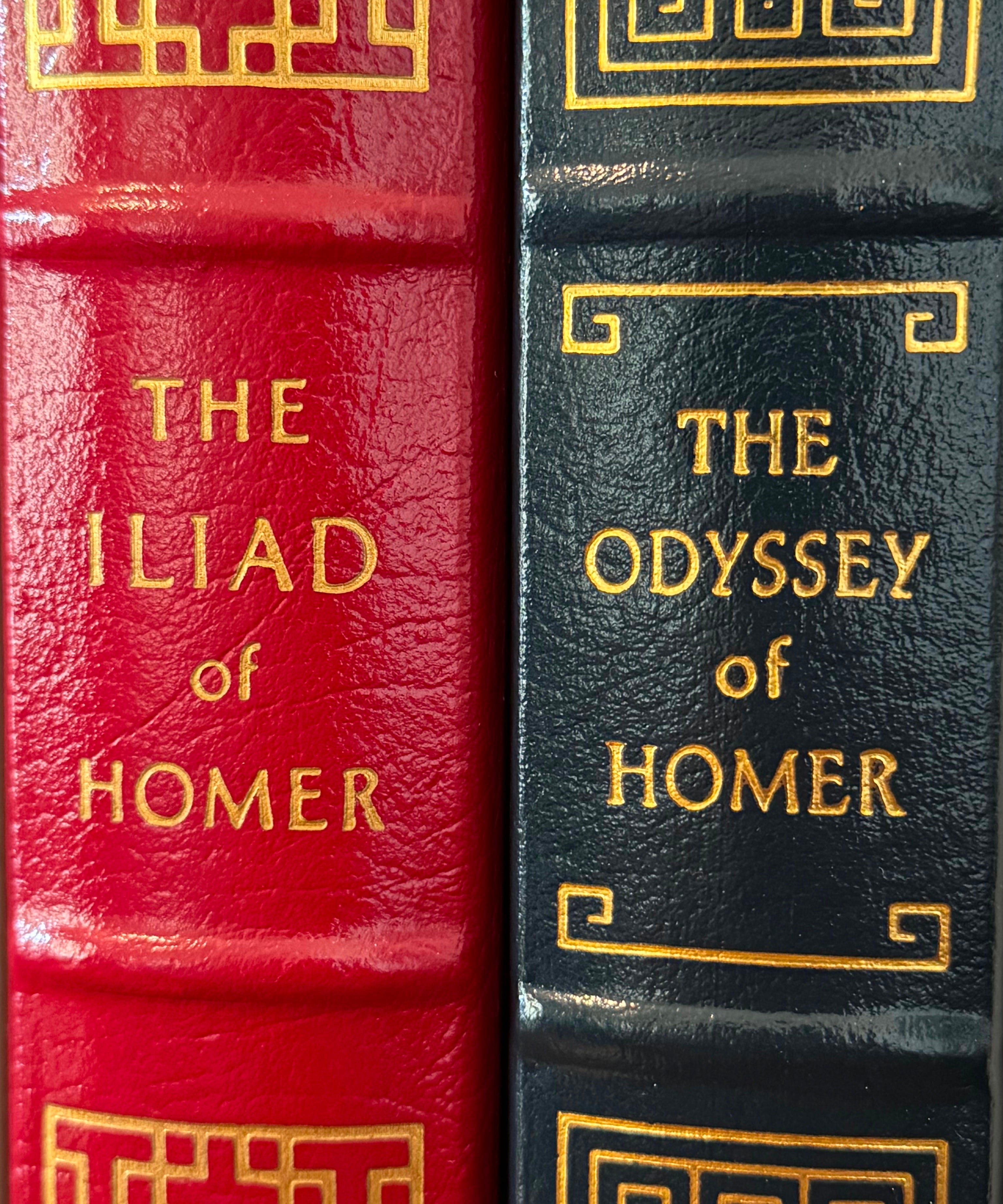
A certain film has been making recent headlines and has sparked a fresh interest in Homer’s epic poem, The Odyssey. In 1929, Alfred North Whitehead said “the safest general characterization of the European philosophical tradition is that it consists in a series of footnotes to Plato.” While that is likely the case in the philosophical tradition, the western literary tradition is a direct descendant of Homer.
If you’ve never read Homer, where should you start?
In September 2023, I began reading The Iliad for the very first time in my life. It was chronologically the next book on my Great Books reading list and it coincided with a Catherine Project reading group where we read The Iliad and The Odyssey over Zoom.
Reading Homer was one of those experiences where I left sensing I had been changed. There was an Erik before Homer and there was a different Erik after Homer. The Iliad immediately became my favorite book and the best way I know how to describe it is to say that it contains everything. I see traces of Homer in nearly everything I’ve read since then.
I had done some preparation before arriving at Homer. I had read Hesiod and Edith Hamilton to gain some exposure to the world of Greek Mythology. I was coming in fresh and I wanted to have some familiarity with the Greek world.
If I could go back in time to September 2023, would I have approached Homer differently? Perhaps.
My Recommendation
Start with Homer. Yes, you will likely miss many of the mythological references and the layers they add to the understanding of the epic, but it will be an introduction that leaves you wanting more. As you encounter the myths in Homer and then in the Greek Tragedies, you’ll be collecting your own experiences of them across literature.
I liken it to studying business at college, something I did at the undergraduate and graduate levels. You can study business all day long, but there is no comparison to diving in and learning on the job. You may know the correct terms for business-speech by studying it in college, but you’ll better understand business itself by immersing yourself in it.
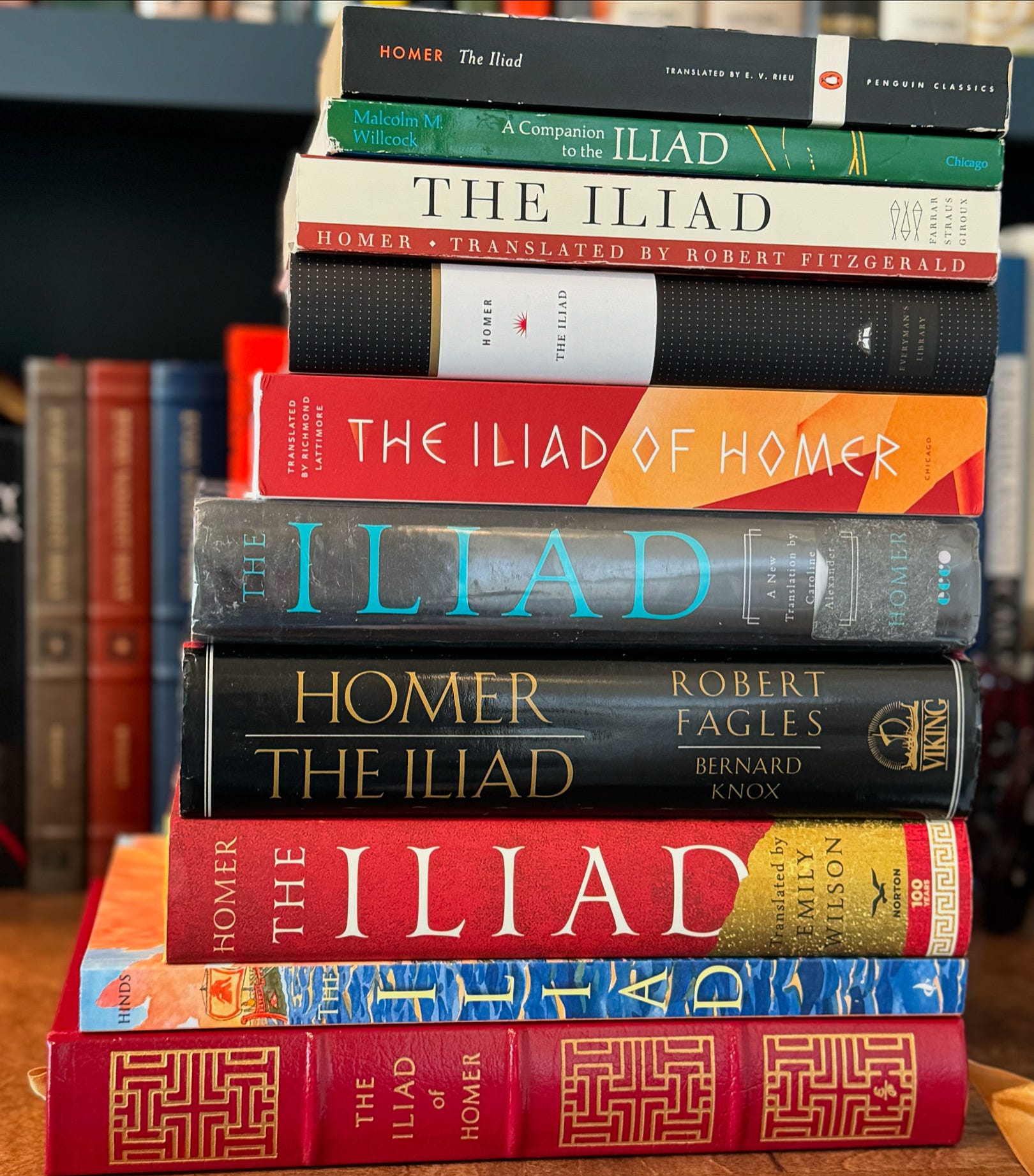
And with Homer, start with The Iliad. Although The Odyssey is popular at the moment, it’s important to know the context of Odysseus’ return, and you’ll find that in The Iliad.
Sources for Mythology
If you’d rather approach Homer with some mythology knowledge under your belt, here are some places where you can start:
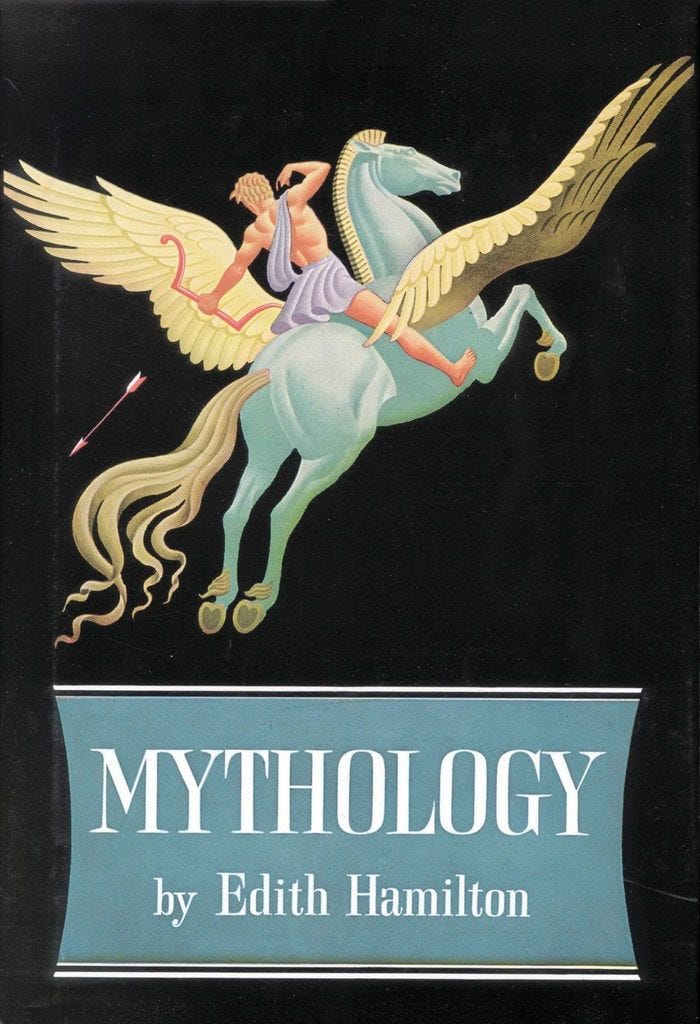
Mythology by Edith Hamilton
I keep this book in close proximity as it is one of the most helpful guidebooks to Greek Mythology. Many of the sources I’ll be mentioning below contain portions of the myths. What Edith Hamilton has done is to combine the stories from all of the sources to present a more cohesive storyline. Sometimes these myths come to us from just one obscure ancient work. This collection helps consolidate all of those stories in one place and is an invaluable reference guide as you read works for Ancient Greece.
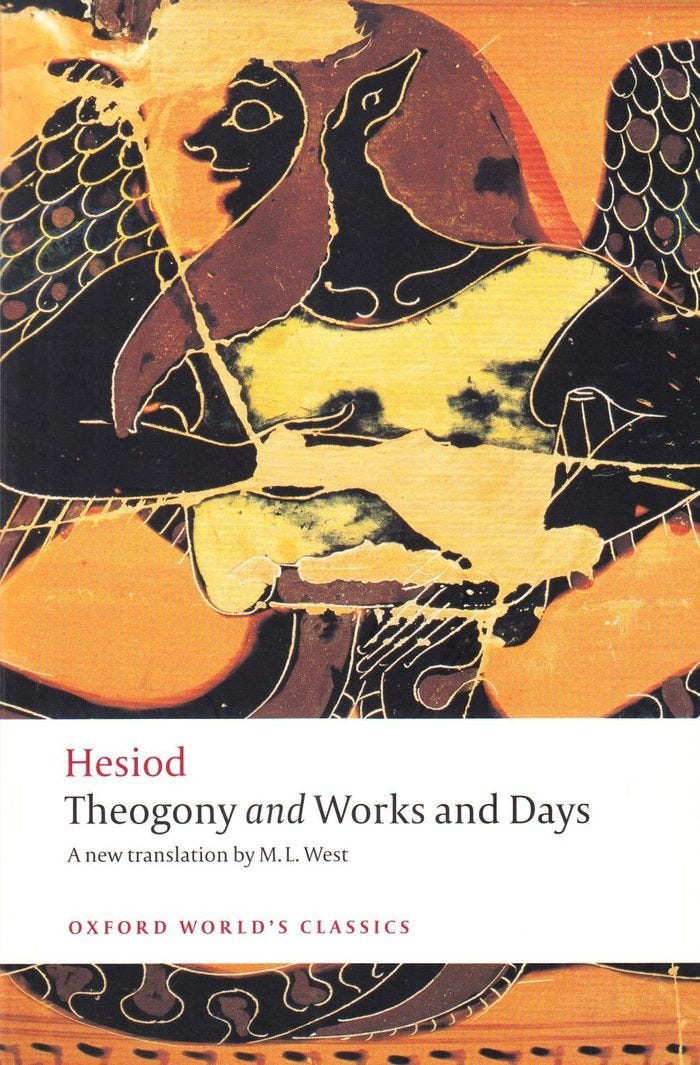
Theogony by Hesiod
Hesiod was a contemporary or near contemporary of Homer and his Theogony is about the genealogy of the gods. Parentage is of extreme importance in Greek mythology as children take on the attributes of their parents.
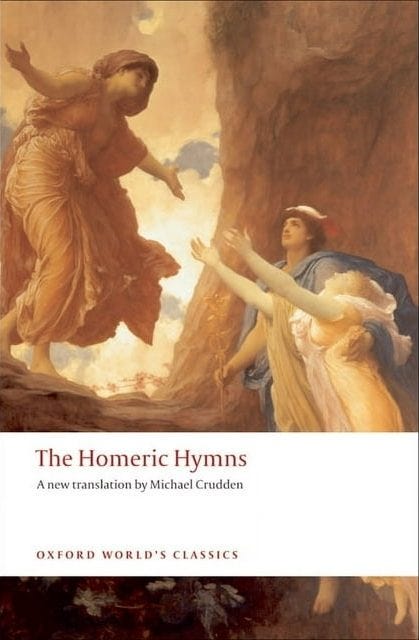
The Homeric Hymns
Attributed to Homer but more likely composed by the Homeridae (children / students of Homer), this work contains a series of hymns about the major Greek gods. The stories are wonderful and I really enjoyed reading this collection.
Greek Epic Fragments
This is one of the most important books to read alongside Homer. The Iliad and The Odyssey are just 2 of 8 total works making up the Trojan Epic Cycle. The other 6 works have been lost to us (it’s also unlikely Homer wrote down the other 6). However, they provide the whole story and fill in gaps we’re used to seeing in these epics. For example, the Trojan Horse, the abduction of Helen, and the death of Achilles do not show up except by reference in either The Iliad or The Odyssey. Instead, they were in other works that fit outside those two works. The book gives summaries of the 6 works that were lost, filling out the entire storyline.
Other Works:
Ovid’s Metamorphoses
Apollodorus’ The Library of Greek Mythology
Starting with the Iliad is good advice. That opening rage of Achilles sets the terms for everything that follows, including the Odyssey. Hesiod's Theogony genuinely helps once the similes start piling up genealogies.
For my first reading of The Iliad and The Odyssey, I read Emily Wilson's translations. For my next For The Odyssey, I read Lombardo. I'll read his for my next visit for The Iliad. Then, I'll probably check out Fagles. I look forward to reading The Greek Epic Fragments and Homer's Hymns also.
For anyone interested, Benjamin Mcevoy from The Hardcore Literature Book Club, did a translation taste test in this video https://youtu.be/vLn_wmedmT0?is=oaT16sE83pYg-55b . He's done some other translation taste tests before, and that's how I normally pick. Ironically, I scored Lombardo's translation the highest after the taste test, but I chose Wilson's instead. I ended up liking hers more, but maybe it's because it was my first read of it?