


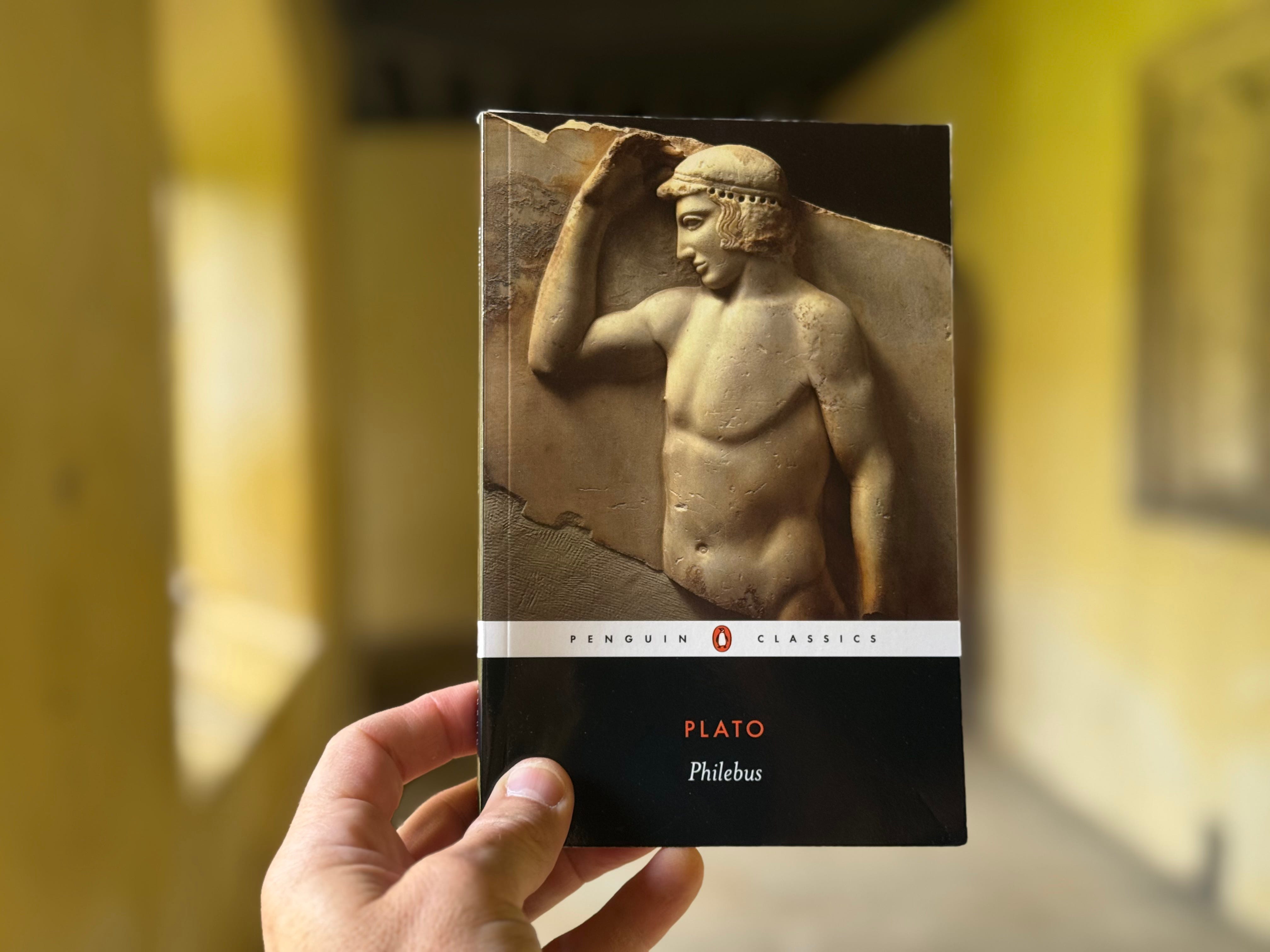
What is the good life? This is the question addressed in Philebus, one of Plato’s later dialogues, written in the late 350s BC. Philebus and his counterpart Protarchus (a pupil of Gorgias) argue for pleasure as the highest pursuit and good. Plato (through Socrates) argues for wisdom and knowledge. Can either of these be the sole pursuit of the life well-lived? The goal of the dialogue is to rank pleasure and wisdom.
Plato quickly establishes the necessity for a third option in this quest - a mixture of pleasure and wisdom. It’s impossible to have pleasure without thought and memory and a life solely dedicated to wisdom would be a bit dry. However, pleasure by its nature is unlimited, and therefore cannot be ranked or measured.
Plato then distinguishes between true and false pleasures. True pleasures are those that don’t involve pain (like witnessing a sunset or hearing a beautiful piece of music). False pleasures are those based upon false beliefs (like I’m going to win the lottery), bad measurement/distance (another beer now will hurt in the morning), and relief from pain (showing the absurdity of hedonism that more pain leads to more pleasure).
Plato concludes with a ranking or Ladder of Goods:
Goodness in Moderation
In Beauty
In Intellect and Reason (Wisdom from the beginning)
Knowledge
Good/True Pleasures (Pleasure from the beginning, only false pleasures are not allowed)
The key point in this dialogue is that the good life does not consist of getting more of either of the initial pursuits, pleasure or wisdom. Instead, it consists of getting the correct balance between the two.


